The short answer
Explore custom drone components and precision manufacturing opportunities around Shenzhen, including housings, protective covers, brackets, connectors, display bases and packaging.
SEO Information
Meta Description: Explore custom drone components and precision manufacturing opportunities around Shenzhen, including housings, protective covers, brackets, connectors, display bases and packaging.
Primary Keywords:
- Shenzhen drone manufacturing
- Custom drone components
- Drone enclosures
- Drone brackets
- Precision drone parts
- Drone prototyping
A Drone Is More Than a Flying Device. It Is a Precision Structural System.
The drone industry often attracts attention for flight performance, imaging systems, control technology and intelligent functions.
From a manufacturing perspective, however, a drone is not simply a collection of electronic components.
It also involves body structures, support parts, protective covers, connectors, mounting systems, thermal components, packaging and maintenance accessories.
These products have different requirements for weight, dimensions, structural strength, vibration resistance, assembly and materials.
Shenzhen and the surrounding Greater Bay Area have electronics and precision manufacturing resources that international drone brands may want to explore.
Following APEC Shenzhen 2026, overseas businesses researching Shenzhen's technology manufacturing sector may also find drone-related components and precision structural parts worth examining.
This article focuses on non-weapon-related components, display products and sourcing requirements for civilian, commercial and industrial drones.
1. What Structural Components and Accessories Does a Drone Need?
Drone designs vary considerably.
A typical multirotor drone may include:
| Component | Main Function | Possible Customization |
|---|---|---|
| Main housing | Protects internal components | Plastic housings, composite appearance parts |
| Arm structures | Support related components | Structural parts, connectors |
| Protective covers | Protect selected components | Plastic protective covers |
| Mounting brackets | Secure cameras or sensors | CNC brackets, plastic brackets |
| Battery mounting structure | Secure battery components | Battery holders and clips |
| Interface covers | Protect openings and connectors | Protective caps and sealing structures |
| Display base | Supports presentation or storage | Acrylic, metal or plastic bases |
| Transport packaging | Protects equipment and accessories | Custom inserts and protective cases |
Not every component is suitable for ordinary custom manufacturing.
Parts involving flight safety, load-bearing performance, rotating components, propulsion systems or critical control systems require design, testing and validation by qualified engineering teams.
For general custom sourcing, it is more appropriate to begin with non-critical appearance components, display accessories, packaging and engineering-approved structural accessories.
2. Why Are Weight and Structural Performance So Important?
Weight is an important consideration in drone design.
The product must balance structural performance and weight while meeting its intended requirements.
For example:
- A housing must provide sufficient protection rather than simply being lightweight.
- A bracket must be evaluated for mounting and load requirements, not just appearance.
- A protective cover must not interfere with the normal operation of other components.
- Battery mounting structures must meet the product's engineering and safety requirements.
- Packaging should protect the equipment while controlling shipping volume and weight.
Material selection should therefore not be based on price alone.
Plastics, aluminum alloys, composite materials and other engineering materials have different mechanical properties and processing characteristics.
The appropriate material depends on product use, loading conditions, operating environment and engineering requirements.
3. Common Materials and Manufacturing Processes for Drone Accessories
#### Plastics and Engineering Plastics
Suitable for selected housings, protective covers, interface caps and non-critical structural parts.
Depending on product quantity and structural complexity, possible processes include:
- 3D printing;
- CNC machining;
- Injection molding;
- Silicone molding.
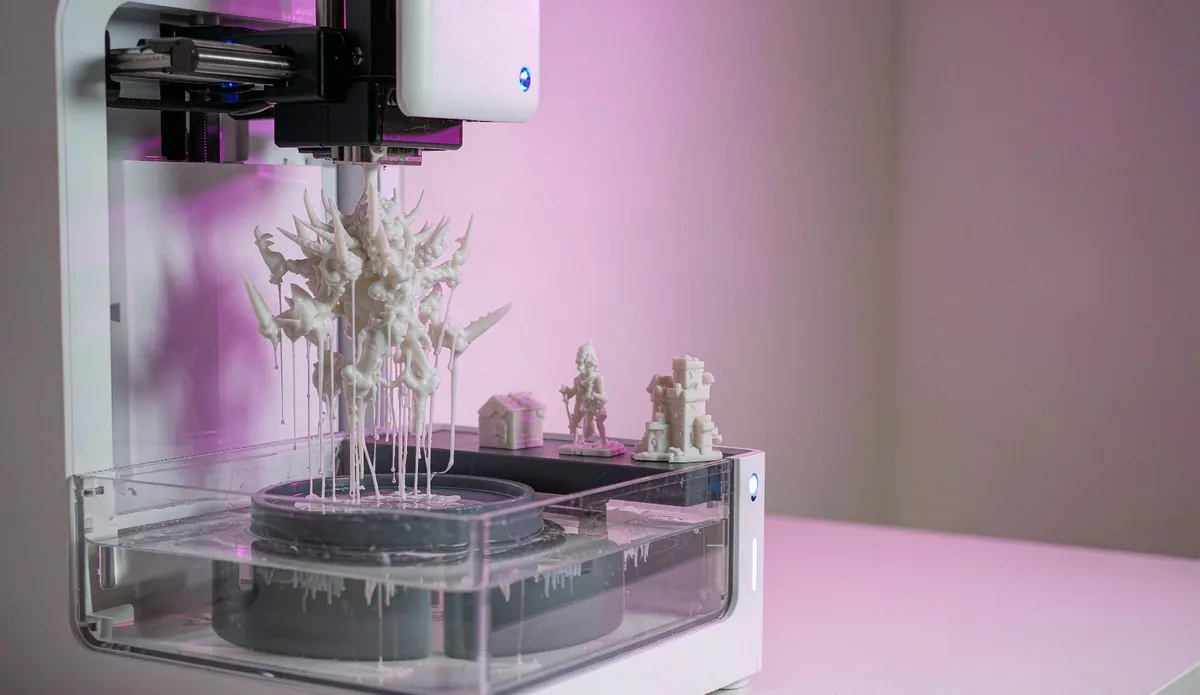
If the design is still under development, 3D printing can help validate appearance and assembly.
If the design is stable and production quantities justify the investment, injection molding can be evaluated.
#### Aluminum Alloy
Suitable for selected mounting brackets, connectors, fixing bases and other metal accessories.
Possible processes include:
- CNC machining;
- Aluminum profile processing;
- Drilling;
- Tapping;
- Anodizing.
Dimensions, tolerances, mounting holes and surface requirements should be specified.
#### Acrylic
Acrylic is more suitable for display applications, such as:
- Drone brand display bases;
- Product display stands;
- Exhibition signs;
- Accessory display boxes.
It is not a default material for flight-critical structural components.
#### 3D Printing Materials
3D printing can be used for:
- Appearance models;
- Structural validation samples;
- Accessory prototypes;
- Selected low-volume non-critical parts;
- Display models.
Different printing technologies and materials have different strength, temperature resistance, surface quality and cost characteristics.
Parts intended for actual flight use require engineering validation. A sample that can be assembled is not automatically suitable for flight conditions.
4. What Supporting Products Do Drone Brands Need Beyond the Main Device?
A drone brand does not necessarily sell only the drone itself.
It may also require supporting products.
Branding and Retail Accessories
- Brand nameplates;
- Product labels;
- Accessory storage boxes;
- Custom tool bags;
- Manuals;
- Packaging boxes.
Display and Marketing Products
- Acrylic display stands;
- Metal display bases;
- Product models;
- Exhibition signs;
- Branded gifts.
Non-Critical Structural Accessories
- Appearance covers;
- Mounting brackets;
- Accessory holders;
- Transport protection structures;
- Storage and display accessories.
These products can be developed under a consistent brand design system.
For example, a premium drone brand may choose metal nameplates, custom inserts and high-quality packaging.
A brand serving professional customers may place more emphasis on accessory organization, tool storage and transport protection.
5. How to Develop a Custom Drone Accessory
A project involving a drone housing, bracket or display accessory can follow these steps.
Step 1: Define Its Purpose
Is it used during flight, or is it intended for ground display, transportation or storage?
This distinction is essential.
Step 2: Provide Reference Information
Include photographs, dimensions, 3D models, engineering drawings and mounting locations.
Step 3: Confirm Materials and Processes
Select plastics, aluminum alloy, acrylic or other materials according to the intended use.
Step 4: Review the Structure
Confirm mounting holes, connection methods, thickness, weight and assembly requirements.
Step 5: Produce Samples
Inspect appearance, dimensions and assembly.
Step 6: Conduct Engineering Validation
Components used during flight or affecting safety must be tested by an engineering team with appropriate capabilities.
Step 7: Confirm Production and Packaging
Arrange sourcing and delivery according to quantities, quality standards and intended use.
6. What Should Overseas Drone Brands Consider When Sourcing from China?
Drone accessories are not simply ordinary plastic or metal parts.
Buyers should pay particular attention to:
1. The actual purpose of each component; 2. Complete dimensions and engineering files; 3. Vibration, impact and loading requirements; 4. Material suitability for the operating environment; 5. Flight safety implications; 6. Testing and certification requirements; 7. Intellectual property and design confidentiality; 8. Consistency between samples and mass-produced parts.
For flight-critical components, purchasing decisions should never be based on supplier quotations alone.
7. How Can WOW Support Custom Drone Sourcing?
Depending on project requirements, WOW can evaluate sourcing options for:
- Drone appearance covers;
- Non-critical structural components;
- Mounting brackets;
- CNC-machined parts;
- 3D-printed prototypes;
- Product display bases;
- Acrylic display stands;
- Metal nameplates;
- Accessory storage boxes;
- Custom packaging;
- Product manuals and labels.
If you are developing a drone brand, drone accessories or related commercial display products, you can provide WOW with product photographs, drawings, material requirements and order quantities.
For flight-critical structural parts, engineering design, testing requirements and supplier qualifications must be confirmed first. Ordinary custom machining should not be confused with certified flight-component manufacturing.
Frequently Asked Questions
Q1: Can drone housings be customized?
Yes. Custom housing options can be evaluated according to dimensions, structure, materials and surface requirements. It is important to clarify whether the housing is for display, non-critical protection or actual flight use.
Q2: Can 3D printing be used for drone accessories?
3D printing is suitable for prototypes, appearance models and selected low-volume parts. Components used during actual flight require engineering validation based on material performance and structural requirements.
Q3: Is CNC machining suitable for drone brackets?
Selected metal brackets can be CNC machined. Material, loading requirements, dimensional tolerances and mounting methods must be confirmed.
Q4: Can WOW provide complete drone manufacturing services?
WOW can evaluate custom sourcing requirements for housings, non-critical structural accessories, display products and packaging. Complete drone development, flight control systems, propulsion systems and flight safety validation require specialized companies with the appropriate capabilities.
Work With WOW
Looking for Custom Drone Accessories or Precision Parts?
Send Your Drawings and Product Requirements to WOW.